Get local action alertsSign up →

Loading the county camera map. Open the DeFlock source map

California Central CoastSan Luis Obispo County
155 mapped pointsTap a point for details

Local records and findings

San Luis Obispo County

    The plan

    Get the proof. Bring the pressure.

    Police departments promise safeguards. Local records reveal missing audit evidence and apparent policy conflicts. Help us demand answers and turn those findings into a public decision to end mass plate surveillance.

    How records become change

    Follow the searches.
    Then follow through.

    A camera count is the starting point. The real questions are who searched, why they searched, who received the data, and whether anyone checked for misuse. Access to the evidence remains uneven: some agencies have released redacted search logs, while others have withheld logs or have not yet supplied them. We identify each agency's response below rather than treating a delay, a partial release and an explicit refusal as the same thing.

    01

    Get the records

    Ask for the evidence behind the promises.

    Search logs can show an officer's stated purpose, the date and scope of a search, and the account used. Training records, sharing settings, and completed audit reports show whether promised safeguards can be checked.

    Our local records requests ask for those documents. Read the findings above, then ask your council to put missing oversight records and the camera contract on a public agenda.

    Explore the local evidence →

    Agency originals are preserved. Downloadable publication copies are released after a privacy review; evidence notes remain available while that work continues.

    02

    Expose misuse

    Every search should have an accountable purpose.

    We check searches against the rules governing purpose, authorized users, training, sharing, retention, and audits. An unexplained search or missing review deserves a documented answer. Confirmed misconduct belongs at the top of an agency's profile.

    Mountain View: an audit exposed unauthorized access.

    The City said an internal audit found access by federal and state agencies that violated its approved policies. Cameras were shut down, and the council unanimously voted to end the Flock contract on February 24, 2026.

    Read the City's account ↗
    See the rules we check →
    03

    End the surveillance

    Turn the findings into a council decision.

    Bring a specific finding to public comment. Ask officials to publish the audits, explain unauthorized access, and vote on ending the contract. Petitions and neighbors speaking together make that demand harder to ignore.

    Evanston: 19 cameras switched off.

    After a state audit and concerns about safeguards for federal access, Evanston deactivated all 19 cameras and issued a contract termination notice in August 2025.

    Read the City's decision ↗
    Tell me when to show up →

    The rules behind the records

    A search needs a reason.
    A safeguard needs proof.

    We compare each agency's records with California law and the policy governing that period. Search purposes, training, audits, outside access, and deletion settings are central to that review.

    Who searched, and why?

    California's ALPR law requires covered operators to keep the access date and time, query information, user identity and affiliation, and access purpose. Authorized purposes must be defined in the usage policy.

    Civil Code 1798.90.52 ↗

    Where are the audits?

    State law requires end-user policies to include a process for periodic audits. Local policies add their own oversight provisions. Search logs tell us what happened; completed reviews show whether anyone checked it.

    Civil Code 1798.90.53 ↗

    Who received the data?

    California DOJ says California law-enforcement agencies may not share ALPR information with federal or out-of-state agencies. We seek actual access and disclosure records, alongside permission settings, to investigate compliance.

    California DOJ guidance ↗
    How we test a policy violation

    We match the applicable policy version to the date of the activity, identify the exact requirement, and compare it with the original records. A missing purpose in an export requires checking redactions and related records. A missing audit report must be distinguished from an agency admitting it never audited. Confirmed violations, apparent policy conflicts, and withheld evidence are identified separately in each profile.

    Department training rules, retention schedules, executed contracts, sharing approvals, and county or federal requirements are assessed where applicable. A vendor recommendation is not a law, and a proposed bill is not an enacted requirement.

    Read the California State Auditor's ALPR findings ↗
    Cal Poly: a commitment to drop Flock.

    Student organizers report that Cal Poly committed to ending its Flock contract when it expires in May 2027, barring opposition from ASI or the Academic Senate. Their May 28 update describes a replacement license-plate-reader system, so this is a commitment to leave Flock, not to end all plate surveillance. Camera removal has not yet been confirmed.

    Read the reported commitment ↗

    Promises versus settings

    Seven days.
    Or five years?

    A crime-solving example does not answer how long everyone else’s travel history should remain searchable.

    Flock's new recommendation: seven days

    On August 13, 2026, Flock CEO Garrett Langley announced a seven-day retention recommendation and stronger misuse controls amid documented law-enforcement abuse nationwide.

    The new default applies to new law-enforcement customers; existing settings and evidence exceptions can retain data longer.

    Read the announcement · Scope of the new default

    Morro Bay's setting: 1,825 days

    MBPD's produced setting retains detections for five years, about 260 times Flock's seven-day recommendation. Morro Bay uses Motorola/Vigilant, not Flock. Its setting shows how far local retention can depart from a major vendor's shorter benchmark.

    Review the Morro Bay evidence notes

    A search log is not an audit

    Vendors promote local control, auditability and success stories. Local control should mean visible settings and accountable decisions. An automatically recorded search proves little about oversight unless someone reviews it, investigates misuse and reports the corrective action.

    Review the evidence methodology

    Privacy crosses party lines

    Opposition is not
    a partisan monopoly.

    Across the political spectrum, elected officials are challenging mass license-plate surveillance and calling for greater restrictions and oversight. Warrantless mass surveillance is un-American.

    Republican · Kentucky

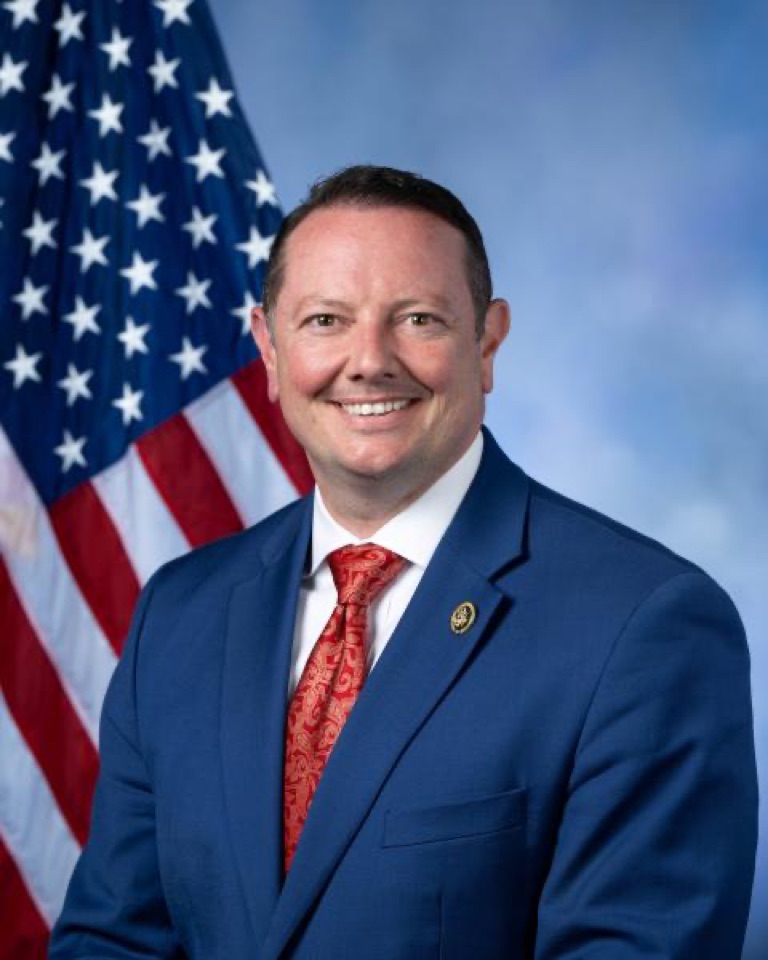
    Official portrait of Thomas Massie
    Official photo

    Thomas Massie

    The U.S. representative introduced the Flock-Off Act on September 2, 2026, proposing to prohibit federal funding for ALPR and biometric surveillance cameras. This is proposed legislation, not an enacted ban.

    Read his announcement

    Republican · Missouri

    Official portrait of Eric Burlison
    Official photo

    Eric Burlison

    The U.S. representative is co-leading the Flock-Off Act with Massie. Their proposal challenges federal financing of surveillance infrastructure rather than relying solely on vendor assurances of responsible use.

    Read the joint proposal

    Democrat · Oregon

    Official portrait of Ron Wyden
    Official photo

    Ron Wyden

    The U.S. senator challenged Flock’s protections against federal and out-of-state access, pressing the company about abuse risks and gaps in safeguards for Oregonians. His letter demands accountability; it should not be described as the same proposal as the Flock-Off Act.

    Read his letter and statement

    Independent · Vermont

    Official portrait of Bernie Sanders
    Official photo

    Bernie Sanders

    Sanders said he planned legislation to “stop Flock and AI mass surveillance.” He warned against government tracking powered by private technology companies. This is an announced proposal, not an enacted ban.

    Read his reported statement

    Republican · Missouri

    Official portrait of Josh Hawley
    Official photo

    Josh Hawley

    Hawley opened a Senate investigation into how Flock collects, retains and shares surveillance data, demanding documents from its CEO. Congressional scrutiny puts the company's safeguards on the public record.

    Read his investigation announcement

    Republican · Texas

    Official portrait of Greg Abbott
    Official photo

    Greg Abbott

    Amid public backlash, Abbott ordered that state funds not be used to purchase Flock cameras. That funding restriction is not a statewide ban on locally funded systems.

    Read the reporting

    Public pressure. Real decisions.

    More communities.
    Fewer Flock contracts.

    Residents are asking who can search their movements, demanding records, and bringing those questions to council. Across the country, communities are responding by ending camera contracts.

    93

    August contract endings

    Secure Justice's count of jurisdictions ending Flock relationships in August, reported in Ars Technica's August 28 update.

    4×

    A sharp monthly increase

    Ars reported the initial August tally was roughly four times July's. These are advocacy-tracked contract outcomes, not a count of physically removed cameras.

    11

    Arizona terminations

    By September 8, KJZZ reported eleven Arizona communities had ended Flock contracts. Others chose restrictions instead of cancellation.

    Counts are dated snapshots with different tracking definitions. Flock told Ars that new city partnerships still outpaced nonrenewals in 2026.

    Your voice belongs in this decision

    Be there when
    the decision is made.

    Get alerts about council meetings, petitions, and opportunities to speak up. We will send the records and clear talking points so you can help end mass plate surveillance in your community.

    The evidence keeps growing

    Abuse, uncertainty,
    and public pushback.

    Latest reporting first, ordered by publication date. Allegations, disciplinary findings, settlements and court decisions are labeled separately. Updated September 15, 2026.

    Scroll within the list to browse all stories.

    Your email. Your choice.

    We use your email to send records updates, meeting information, and campaign opportunities. We do not sell or publish the list. You can unsubscribe from campaign messages or request deletion by emailing privacy@deflockslo.com. Brevo handles subscriptions and email delivery; Cloudflare Turnstile protects this form from bots. Read our full privacy notice.

    Evidence, not exaggeration.

    City profiles use agency-produced records, policies, contracts, invoices, correspondence, and log exports. A map point is community-reported and does not prove ownership or current operation. “Potential policy mismatch” means the records need reconciliation; it is not a final legal finding.

    For source copies or corrections, email records@deflockslo.com.